



 Arguments







Explaining climate change science & rebutting global warming misinformation
Global warming is real and human-caused. It is leading to large-scale climate change. Under the guise of climate "skepticism", the public is bombarded with misinformation that casts doubt on the reality of human-caused global warming. This website gets skeptical about global warming "skepticism".
Our mission is simple: debunk climate misinformation by presenting peer-reviewed science and explaining the techniques of science denial, discourses of climate delay, and climate solutions denial.



Skeptical Science New Research for Week #38 2026
Posted on 17 September 2026 by Doug Bostrom, Marc Kodack
Open access notables

Projected amplification of global warming by warming-induced greenhouse gas emissions, Abernethy et al., Environmental Research Letters
Warming-induced emissions (WIE) of greenhouse gases from natural sources are a large amplifying feedback that most climate models do not yet represent. This absence risks systematic underestimation of projected future warming and overestimation of remaining carbon budgets. To assess the potential magnitude of these feedbacks, we derived relationships between global temperature and WIE rates from process-based model estimates across three Shared Socioeconomic Pathways, SSP1-2.6, SSP2-4.5, and SSP4-6.0. The warming-induced methane emission rate from permafrost, wetlands, freshwaters, and wildfire combined increases with temperature at an estimated 97 ± 6 Tg CH4 yr−1 °C−1 across all three scenarios, while the warming-induced carbon dioxide emission rate from permafrost and wildfire combined increases at 7 ± 1 Pg CO2 yr−1 °C−1 in SSP2-4.5 and SSP4-6.0. Using the MAGICC climate model, we projected that WIE could add 0.2 °C–0.4 °C of warming by 2100 across scenarios, split roughly equally between carbon dioxide and methane, amplifying post-2020 anthropogenic warming by 20%–30%. Combined emission sensitivity and climate response 1σ uncertainties are ±0.2 °C on the added warming and ±10%–30% on the warming amplification.
Interpreting Ensembles of Climate Projections for Impact Studies, Chandler & Brierley, Wiley Interdisciplinary Reviews Climate Change
To study the potential impacts of future changes in the earth's climate, projections of these changes are required. These are usually produced using complex computer models, and are subject to many uncertainties which are often sampled using collections (“ensembles”) of model simulations. However, the sampling in any individual ensemble is incomplete and often unrepresentative. This creates challenges for users of the projections, especially when it is important to understand the range of potential impacts that can reasonably be expected. Other challenges include the presence of systematic discrepancies between the model outputs and observations of the real climate system; and the fact that it is often infeasible to work with all members of an ensemble so that an appropriate subset must be chosen. Various approaches have been suggested for addressing each of these issues: a critical review is provided here, to allow an informed choice depending on the requirements of a given application.
The emergence of climate migration research as an academic field, Kohutova et al., Frontiers in Climat
This study examines how research on climate migration has developed from a dispersed topic of academic interest into a distinct academic field. Although the links between environment and human mobility have been studied for over a century, less attention has been paid to how knowledge has been structured and institutionalized around this topic. To address this gap, the article examines how climate migration scholarship has grown, organized its scholarly community, and gained recognition from external actors. Drawing on theories of field formation, we analyse four dimensions of academic fields: differentiation from other research areas, epistemic and social coherence among scholars, their social infrastructure and legitimacy-building. The study uses a mixed-methods approach combining bibliometric analysis, document and policy review, and expert interviews. The findings show that the formation of climate migration as a research field was a cumulative process. Policy attention brought resources for more research, while a shared understanding that climate migration is driven by multiple interacting factors, not climate alone, gave scholars common ground to organize around. Expanding citations and co-authorships networks then gave the field its structure over time. However, the field formation remains uneven. The networks are geographically uneven, research is being published across hundreds of journals, and theoretical frameworks are underdeveloped. Overall, the article shows how new research topics consolidate as academic fields and argues that the label of ‘research field' is not merely descriptive because it impacts visibility, resources, and epistemic authority.
Future warming enhances rates of population increase of arthropod crop pests globally, Molina et al., Ecography
We compiled a dataset on the thermal biology of arthropod crop pests and fitted TPCs to examine the projected shifts in performance under historic and future climates relative to their thermal niches, which were examined through modelling the latitudinal variation of their population-level thermal limits. Our findings highlight that most arthropod crop pests are projected to increase their thermal potential for population growth under warming by 2050, with temperate populations retaining room to grow but tropical populations increasingly exposed to heat stress. These findings can be explained by the asymmetric variation of thermal niche limits for these intrinsic rates of population increase, since we found that lower thermal limits declined with latitude, while upper thermal limits remained constant.
From this week's government/NGO section:
Communicating about Climate and Clean Energy in an Age of Affordability, Andrea Everett, Heatmap and Embold Research
Each phase of research built on the previous one, starting with a large national survey to uncover the core values, priorities, and beliefs of three broad segments of the electorate with different views of climate change. These groups were labelled as Skeptics, Persuadables, and Persuadeds. For climate and clean energy communicators, the electorate is best understood as three distinct audiences. Persuadeds already believe in the 11 urgency of climate action and clean energy. What they lack is the conviction that their own actions matter, so the core tasks are to give them concrete, achievable things to do and to help them see that their efforts matter. Persuadables are open but unconvinced, and on the central issue of clean energy affordability they demand proof they can see close to home, rather than broad statistics or slogans. Skeptics, meanwhile, may be reachable through appeals to their values of personal freedom and energy independence, supplemented by evidence on cost and reliability, but with so few trusted messengers to make the case, clean energy remains a tough sell.
What are the top social media platforms used by each of Global Warming’s Six Americas?, Ettinger et al., Yale University and George Mason University
In Fall 2025, as part of a biannual Climate Change in the American Mind survey, the authors asked a nationally representative sample of Americans (n = 1,146) how often they visit 14 different social media platforms. They were also asked how often they hear about global warming on social media. Across Global Warming’s Six Americas, the most commonly visited social media platforms are YouTube, Facebook, and Instagram. The Alarmed hear about global warming on social media more often than other segments of the Six Americas.
94 articles in 53 journals by 625 contributing authors
Physical science of climate change, effects
Contrasting SST modes explain decadal intensification of Pacific Walker Circulation, Li et al., Atmospheric Research 10.1016/j.atmosres.2026.109338
The next water crisis is beneath our feet
Posted on 16 September 2026 by Guest Author
This is a re-post from Yale Climate Connections by Sanket Jain
Extreme heat and widespread drought related to climate change have been in the headlines this summer everywhere from Europe to the Colorado River Basin to Puerto Rico and Bangladesh. But drought is only the beginning of the problem for drinking water. Scientists say the depleted groundwater supplies that remain will warm by 2.1 degrees C globally by the end of this century – changing their chemistry and leading to contamination.
And heat is just one concern. Droughts and fluctuating rainfall patterns are also altering groundwater quality. The good news is that around the world, local and regional authorities are experimenting with ways to replenish groundwater, including methods for collecting excess rainfall or surface runoff and channeling it to replenish aquifers. The work is in early stages, but some methods already are showing promise.
Warming water, changing chemistry
As groundwater warms, dissolved gases become less soluble, while organisms underground can consume oxygen more rapidly. Because many aquifers already contain little oxygen, modest warming could make them even more oxygen-poor.
In some aquifers, this shift can mobilize naturally occurring contaminants such as arsenic, manganese, and phosphorus from surrounding rocks into groundwater, making it less safe to drink. The extra phosphorus can fuel harmful algal blooms when groundwater eventually flows into rivers and lakes. Warmer groundwater may also favor pathogens linked to waterborne diseases.
Under a stable climate, Earth gets warmer deeper underground because heat from the Earth’s core moves toward the cooler land surface, explained Barret Kurylyk, a professor of civil and resource engineering at Dalhousie University and Canada Research Chair in Coastal Water Resources.
“In the past few decades, the land surface has warmed due to climate change,” he said.
As the surface becomes warmer than shallow aquifers, the usual temperature difference reverses, causing heat to move downward toward groundwater. Movement of rain or snow downward can also transfer heat into groundwater, exacerbating the change in groundwater chemistry.
This heat transfer matters because groundwater accounts for 99% of the Earth’s liquid freshwater, provides about half the world’s drinking water, and supplies nearly 40% of the water used for irrigation. By 2100, an estimated 77-188 million people are expected to live in areas where groundwater exceeds the highest drinking-water temperature acceptable threshold adopted by any country.
The Atmosphere Just Set a Water Vapor Record
Posted on 15 September 2026 by Guest Author
This is a re-post from The Climate Brink by Andrew Dessler
A few days ago, on an atmospheric sciences mailing list, Prof. Gary Lackmann pointed out that August 2026 set a record for the amount of water vapor in the atmosphere. I thought this was right in TCB’s wheelhouse, so I’ve dug further into the numbers in this post.
What does “precipitable water” mean?
Precipitable water (abbreviated PWAT) is the water in the atmosphere that’s available to condense and fall as rain or snow. We quantify it by calculating how deep a puddle it would make if you condensed all of the water vapor in the atmosphere and rained it to the surface. The value is typically reported in millimeters.
Here is the average PWAT over the 1991–2020 period. The global average is about 24 mm, enough to make a puddle about an inch deep.
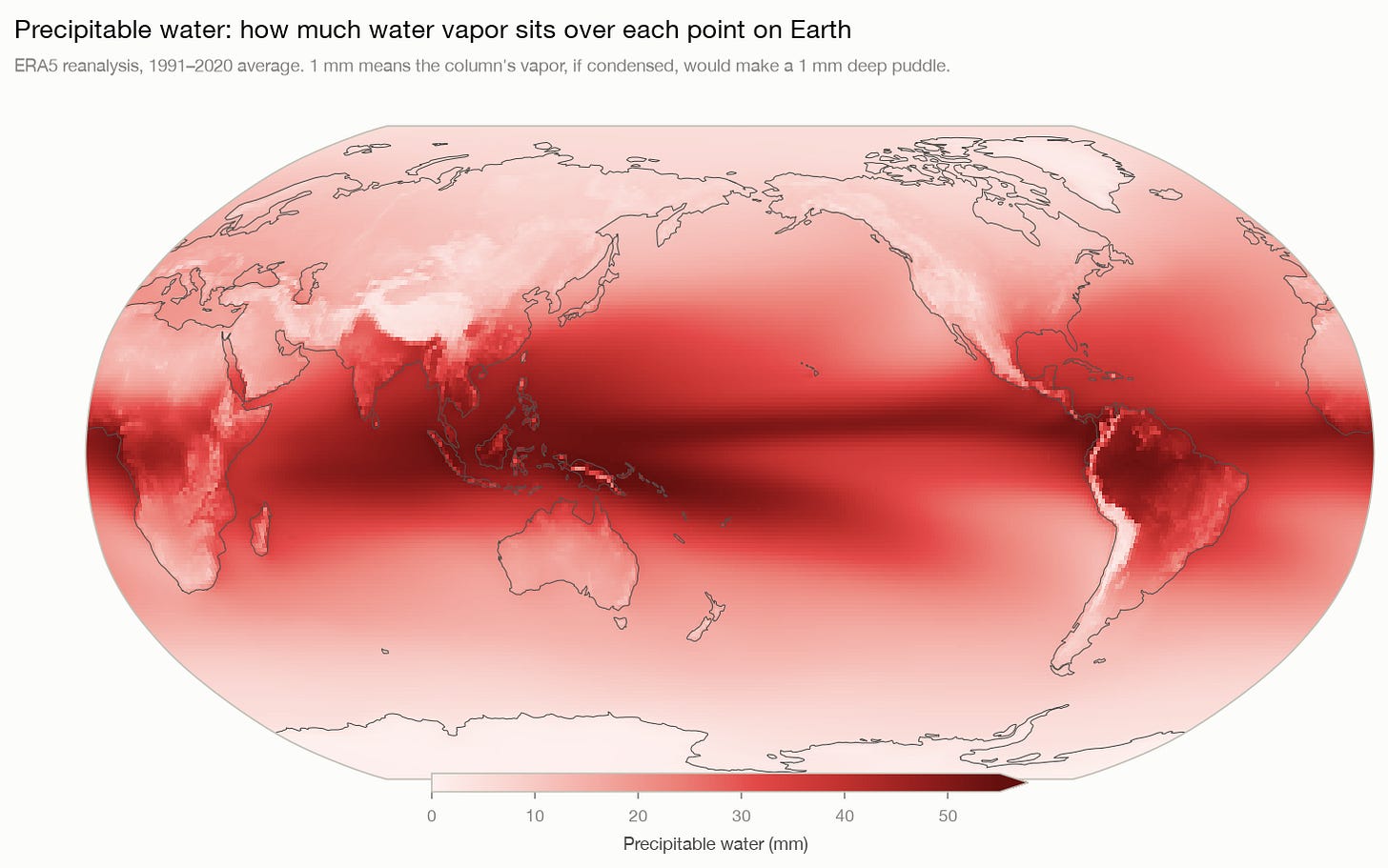
The distribution of PWAT follows the distribution of temperature. The reason is thermodynamics: the amount of water vapor that air can hold increases by roughly 7% for every degree Celsius of warming, following the Clausius–Clapeyron relation. The result is high PWAT in warm tropics and low PWAT in cold polar regions.
Factcheck: Reform UK’s 45 false or misleading claims about climate and energy
Posted on 14 September 2026 by Guest Author
This is a re-post from Carbon Brief by Josh Gabbatiss, Daisy Dunne, Molly Lempriere, Dr Simon Evans
Reform UK, led by Nigel Farage, has emerged as a major force in UK politics in recent years – pushing anti-net-zero policies, alongside vehement opposition to immigration.
The hard-right populist party is currently mired in a funding controversy and only has a handful of MPs, yet, until recently, it had been leading in national polls for more than a year.
As seen with many similar parties across Europe and beyond, a rejection of climate science is central to Reform’s ideological outlook.
Richard Tice, the party’s deputy leader, is a vocal critic of what he calls “net stupid zero” and has incorrectly blamed “the sun or volcanoes” for human-caused global warming.
As Reform’s energy spokesperson, Tice has also been clear that, if the party were ever to form a national government, it would scrap the UK’s net-zero target, support fossil-fuel expansion and tear up existing contracts for renewable energy.
While less vocal on the subject, Farage has, nevertheless, expressed climate-sceptic views and falsely blamed net-zero policies for the “deindustrialisation of Britain”.
These views draw on long-standing, inaccurate climate-sceptic narratives and are reflected in Reform’s election manifestos, its actions in local government and the opinions of many of its supporters.
Here, Carbon Brief gathers together by topic and factchecks 45 false or misleading claims made by the party’s leadership relating to climate change, renewables and net-zero.
2026 SkS Weekly Climate Change & Global Warming News Roundup #37
Posted on 13 September 2026 by BaerbelW, Doug Bostrom
Stories we promoted this week, by category:
Climate Change Impacts (10 articles)
- Satellite images of penguin droppings reveal impact of antarctic warming Penguin colonies are so large that their masses of excrement can be seen from space, offering scientists a useful means of studying the Antarctic birds. An analysis of 30 years of satellite images of penguin guano shows how the birds’ diets are shifting in response to warming. Yale Environment 360, Staff, Sep 06, 2026.
- Learning from the summers of 1976 and 2026 We have changed the climate in which our weather happens Climat Lab Book, Ed Hawkins, Sep 7, 2026.
- How climate change may amplify the impact of earthquakes in the Arctic Phys.org, Helmholtz Association of German Research Centres, Sep 07, 2026.
- America is losing its war against wildfire The opportunities to let wildfire do its job are being increasingly extinguished by hotter, drier conditions that last longer throughout the year. Grist, Mark Betancourt, Sep 08, 2026.
- Many People Aren`t Connecting the Dots Between Climate Change and Extreme Weather Scientific evidence has never been stronger. Why aren’t more people making the link? Inside Climate News, Kiley Price, Sep 08, 2026.
- Can an entire Arctic ecosystem evolve to adapt to the climate crisis? In the first project of its kind, scientists are trying to answer if the future of Alaska’s streams and tundra may depend not on survival of the fittest but on how species adapt together The Guardian, Gloria Dickie, Sep 09, 2026.
- We just had the hottest August, hottest summer, and hottest year to date in U.S. history NOAA data show unprecedented heat, as deepening drought, shrinking reservoirs, and a severe wildfire season underscore the growing impacts of a warming climate. Could El Niño bring some relief? Yale Climate Connections, Bob Henson, Sep 09, 2026.
- Major study to assess impacts of climate change on Scotland`s canals Scottish Canals is working with two globally renowned climate and heritage experts to assess the growing challenges posed by climate change to Scotland’s network of canals. The Herald News, Craig Williams, Sep 10, 2026.
- Climate `feedback loops` could worsen global warming by 30%, study finds Emissions of planet-heating methane and CO2 from natural sources are worsening the climate crisis, paper says The Guardian, Oliver Milman, Sep 10, 2026.
- Earth just had its hottest August on record The intensifying super El Niño, combined with global warming, is favored to make 2026 the hottest year on record, with 2027 expected to be even hotter. Yale Climate Connections, Jeff Masters and Bob Henson, Sep 10, 2026.
Climate Policy and Politics (4 articles)
- The Worst Case Is Still on the Table Why removing RCP8.5 from the National Climate Assessment would be a serious mistake The Climate Brink, Andrew Dessler, Sep 04, 2026.
- Climate experts respond to the government’s plan to amend the Fifth National Climate Assessment Climate.Us, Rebecca Lindsey, Sep 8, 2026.
- As science comes under attack at UN talks, climate movement splits over how to respond A rift over how IPCC messages are produced and turned into policy is creating tensions in the world’s most influential coalition of climate NGOs Climate Home News, Matteo Civillini, Sep 09, 2026.
- With multilateralism in crisis, what`s next for climate philanthropy? Climate philanthropy must do more than fill the gaps left by retreating governments and find new ways to support climate action in a fragmented global landscape. Climate Home News, Megan Rowling, Sep 11, 2026.
Skeptical Science New Research for Week #37 2026
Posted on 10 September 2026 by Doug Bostrom, Marc Kodack
Open access notables
Early warning signals for tipping points in complex climate systems, LIU et al., Advances in Climate Change Research
The growing risk of climate tipping events underscores the urgent need for reliable early warning signals (EWS). Here we synthesize recent advances in EWS research for climate systems, systematically categorizing available methods into three groups, namely statistical indicators, nonlinear dynamical diagnostics, and data-driven approaches, and evaluating their theoretical applicability to practical limitations. In conclusion, statistical indicators offer theoretical clarity but are sensitive to non-stationary noise, nonlinear dynamical methods provide enhanced robustness in high-dimensional settings, and network- and deep learning-based approaches show the potential for detecting diverse tipping types, particularly when integrated with physical constraints and multi-modal observations. Given these trade-offs, we advocate for three practical strategies to enhance EWS utility, including adopting ensemble frameworks that combine multiple indicators to reduce false alarms, advancing cascade EWS to capture cross-system tipping interactions, and shifting from qualitative trend warnings toward quantitative, threshold-defined predictions with quantifiable uncertainties. We also discuss supporting techniques for these strategies, including adaptive noise filtering, dimensionality reduction, satellite data integration, and physics-informed machine learning. This review provides a structured reference for method selection across climate subsystems and data regimes, and underscores that operational EWS will require sustained integration of nonlinear dynamics, Earth observation, and data science.
Countering climate misinformation with large language models: Evidence from ChatGPT, Tsang & Wang, PLOS Climate
Public support for climate action hinges on the integrity of information environments. In an online experiment, U.S. adults used ChatGPT to evaluate climate-related claims. We first conducted computational text analysis of GPT conversation logs, assessing valence, formality, bias, recency, authority cues, and semantic richness of ChatGPT’s responses using language-model based classifiers and link-level metadata. Concurrently, we measured credibility judgments for both the claims and ChatGPT’s responses through participant self-reports. Credibility perceptions were driven primarily by individual differences; greater acceptance of the scientific consensus, attention to climate change, prior familiarity with ChatGPT, and younger age predicted higher perceived credibility. Once these factors were accounted for, authority cues were associated with slightly less extreme climate attitudes, while positive valence and semantic richness correlated positively with perceived credibility. These results support transparent, unbiased, audience-tailored engagement as a pathway to strengthen responsible climate communication and help bridge the gap between scientific consensus and public understanding.
Lost in Projection: Uncertainty is Misrepresented in Climate Risk and Vulnerability Assessments, Curran et al., Risk Analysis
In practice, many climate change risk assessments fail to capture the true depth of uncertainty. Despite widespread scientific recognition of deep uncertainty (large ranges of possibility) in climate conditions, this nuance is often lost in translation to policy and planning contexts; instead, conditions are presented as single projections. This means that communities are making large-scale infrastructure investments and long-term policy commitments based on false precision, leaving them unprepared for climate surprises or potentially wasting resources and disrupting communities unnecessarily by overadapting. To examine how climate uncertainties are represented and accounted for in adaptation planning, we conducted a structured review of 39 climate risk and vulnerability assessments from across the world, using sea level rise as a case study. These documents inform policy that guides billions of dollars in infrastructure investments and shape community preparedness strategies. Our analysis reveals that only 54% of these documents correctly represent sea level rise as deeply uncertain. This issue is compounded when making decisions; 71% of decisions were made by misapplying scenarios as individual projections to plan for, rather than as a tool for exploring potential future conditions, directly contradicting their intended use. This demonstrates a gap between scientific understanding of climate uncertainty and planning practice. Addressing this gap requires improved uncertainty communication, moving beyond just quantifying uncertainty to also characterizing uncertainty. This must be done in conjunction with the support of decision makers to incorporate a stronger understanding of uncertainty into planning by using tools designed specifically for decision making in deeply uncertain environments.
From this week's government/NGO section:
How Climate Resilient Are the World’s Largest Cities?, AlphaGeo
Geography is not destiny. Cities with near-identical physical risk scores diverge by as much as 33 resilience-adjusted risk (RAJ) points depending on the adaptation measures in place — demonstrating that risk is not fixed, and that resilience is a function of policy and investment, not geography alone. South Asian megacities face a compounding crisis. Ahmedabad (RAJ 41), Hyderabad Pakistan (41), Multan (38), Dhaka (36), Kolkata (35), and Lahore (35) combine extreme physical exposure with only moderate adaptation performance. European, African, and Latin American capitals outperform. Chicago, Addis Ababa, Melbourne, Barcelona, Buenos Aires, Paris, and Nairobi all score below 14 on the RAJ scale, making them among the most resilient major cities globally. Chinese megacities are closing the gap. Beijing (50%), Tianjin (49%), Shenzhen (49%), and Shanghai (46%) lead globally on adaptation efficiency — consistently converting high physical exposure into substantially lower residual risk. Mispriced risk is concentrated in South Asia. South Asia accounts for the majority of cities where residual RAJ scores remain high and adaptation rates remain comparatively low relative to the scale of physical exposure.
Heathrow Airport expansion risks for the Climate Change Act, Tyndall Centre for Climate Change Research, University of Manchester
The authors examine whether a third runway at Heathrow Airport is compatible with the UK’s domestic and international legal climate change obligations, and shows how growing airport capacity before climate technologies succeed will break the UK’s carbon budget. Through an analysis of future UK aviation scenarios and reviewing the status and outlook for key technology options, the authors findings show that Heathrow expansion cannot reasonably be considered consistent with UK Government climate targets. The authors examine three questions including the level of demand implied by an expanded Heathrow Airport; whether sustainable aviation fuels (SAF) can mitigate emissions arising from any net additional demand; and if greenhouse gas removal (GGR) expansion can address remaining additional residual emissions. This assessment is within the context of the UK’s Seventh Carbon Budget, which is a legally binding limit on greenhouse gas emissions (GHG) in the period when the third runway is proposed to start operating.
92 articles in 50 journals by 638 contributing authors
Physical science of climate change, effects
Anthropogenic forcing dominates relentless westward extension of the western North Pacific subtropical high, An et al., Atmospheric Research Open Access 10.1016/j.atmosres.2026.109301
Climate Trunk - Political Economy
Posted on 9 September 2026 by BaerbelW
In April 2026 we published a guest blog post by John Lang in which he introduced his "Climate Trunk" graphics project and website. Since then, he has been adding one graphic per week and plans to keep going for about 2 years rounding out the big picture of human-caused climate change graphic by graphic. In this blog post we'll show-case the graphics related to political economy and will keep adding more as they get published.
How interests, incumbents and competing priorities shape the speed of the transition.
#5 - The New Energy Calculus
The pursuit of clean energy is no longer climate policy. It is increasingly a strategy for security, affordability, development, sovereignty and lower import bills – reshaping how governments think about energy and national interest.
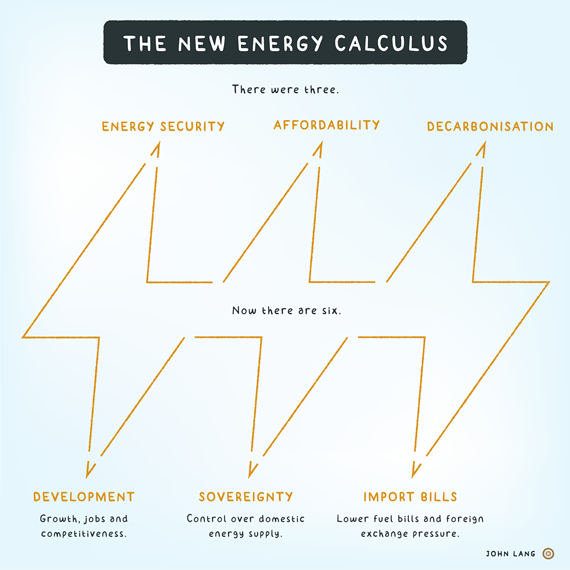
From three to six
#6 - But we are less than 1% - Emissions
No country is too small to matter. Nations that each emit around 1% of global CO2 may look negligible on their own, but together they produce about 30% of the total – roughly as much as China – so if they sit it out, the maths doesn’t stack up.
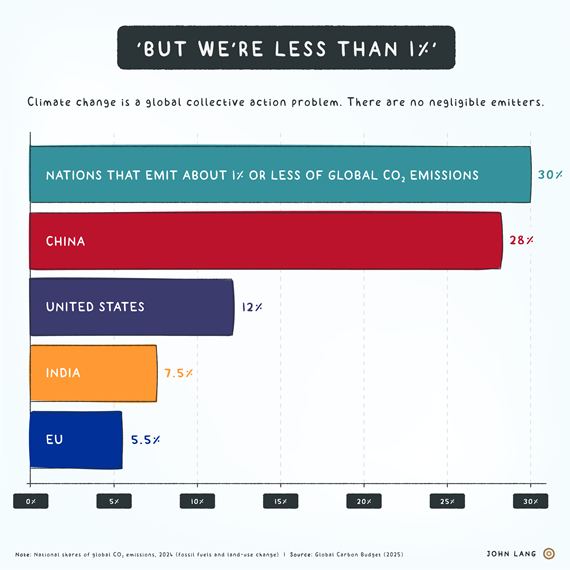
Climate change is a global collective action problem. There are no neglibile emitters.
Fact brief - Does hosting wind turbines provide farmers with additional income?
Posted on 8 September 2026 by Sue Bin Park
 Skeptical Science is partnering with Gigafact to produce fact briefs — bite-sized fact checks of trending claims. You can submit claims you think need checking via the tipline.
Does hosting wind turbines provide farmers with additional income?
 Wind projects provide farmers with substantial economic benefits while allowing most land to remain in agricultural use.
The National Renewable Energy Laboratory estimates about 98% of land within a typical wind project remains available for farming, grazing, or other uses.
Meanwhile, farmers who host turbines can receive long-term lease payments that provide additional income and financial stability. One study found that farmers with turbines invested about twice as much in their farms, while 80% had plans for who would take over or inherit the farm, compared with 62% of farmers without turbines.
Compared with the small amount of farmland used by turbines, unmitigated climate change poses broader risks to agriculture through heat, drought, shifting pests, and reduced crop yields.
Go to full rebuttal on Skeptical Science or to the fact brief on Gigafact
This fact brief is responsive to quotes such as this one.
Sources
NREL Examining Supply-Side Options to Achieve 100% Clean Electricity by 2035
Handbook of Sustainability and Social Science Research Wind Energy and Rural Community Sustainability
Center for Rural Affairs Navigating Land Leases for Wind and Solar
IPCC Special Report on Climate Change and Land: Chapter 5
Columbia Law School Sabin Center for Climate Change Law Rebutting 33 False Claims About Solar, Wind, and Electric Vehicles
Please use this form to provide feedback about this fact brief. This will help us to better gauge its impact and usability. Thank you!
Fixing one of climate’s worst plots
Posted on 7 September 2026 by Guest Author
This is a re-post from The Climate Brink by Andrew Dessler
This is the third and last in our series discussing the use of unadjusted data and how it overstates the warmth of the 1930s over the U.S. See part one and part two for more.
A hall of fame for bad climate plots would definitely include this one:
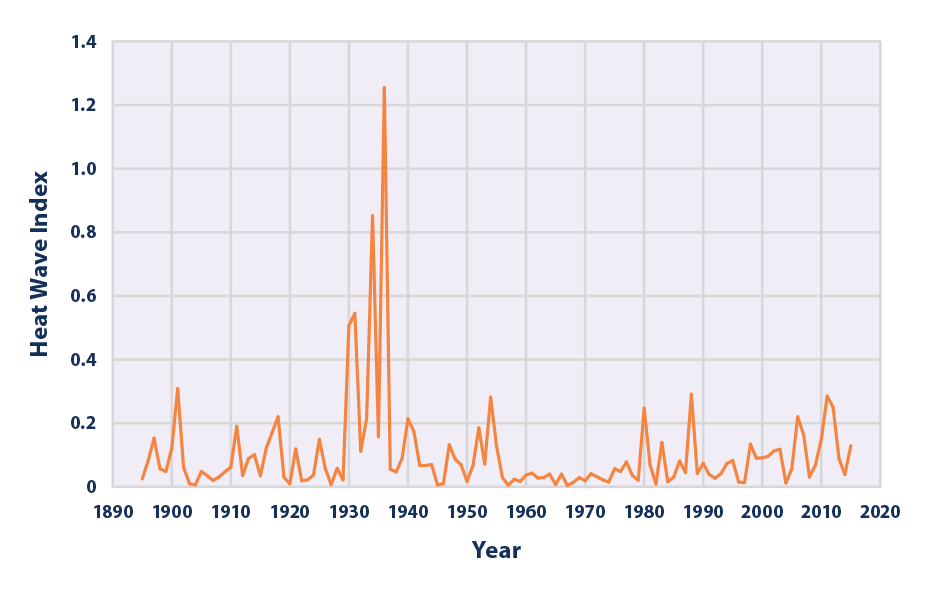
The plot covers the continental U.S., and it dramatically shows that temperatures in the 1930s were more extreme than those of the present period. The metric plotted, the heat wave index, is constructed as a station?average count of qualifying 4?day warm spells (mean temperature exceeds a local one?in?ten?year threshold) in each year, so higher values mean that heat waves were more frequent in that year.
It was originally published in 1999 and has gone through several iterations, with the one above from an EPA website in 2021.
Don’t take this as criticism of the original paper — it was published in 1999, after all. However, the plot has hung around long past its expiration date and has since become a staple of climate denial. I think it’s time to reconsider what the plot actually tells us.
2026 SkS Weekly Climate Change & Global Warming News Roundup #36
Posted on 6 September 2026 by BaerbelW, Doug Bostrom
Stories we promoted this week, by category:
Climate Change Impacts (6 articles)
- When a mountain falls: How ice and rock triggered Nepal`s catastrophic flood - and why climate change is raising the risks The Conversation, Umesh Haritashya, Aug 29, 2026.
- Climate crisis pushes French winemakers to bet on warmer future in Brittany and Normandy An important part of the French economy is chased north by climate change but successful adapatation is not a certainty. France 24, France 24 staff, Aug 31, 2026.
- Coral Reefs Are Running Out of Time to Recover, Research Finds Rising sea temperatures mean reefs don’t have enough time to bounce back between intense heat waves, a new report warns. New York Times, Quinn Glabicki, Aug 31, 2026.
- Nepal`s glacial collapse foreshadowed a future of climate disaster | Michael Mann The deluge capped a summer of extreme climate events, from deadly heatwaves to wildfires. We must take action now The Guardian, Michael Mann, Sep 01, 2026.
- UN finally admits global warming will shoot past 1.5 ºC climate limit According to a report released today by the United Nations Environment Programme (UNEP), the best the planet can hope for on its current emissions trajectory is warming of about 1.8 ºC above pre-industrial levels this century. Nature, James Dinneen, Sept 2 2026.
- Canadians should prepare for a 5 C hotter future, report warns The second edition of Canada's Changing Climate Report, a synthesis of the science on the impact of a warming planet on Canadians, confirms with greater confidence that burning fossil fuels, or what the report calls "human activities," are responsible for climate change. CBC Canada News, David Thurton, Sep 04, 2026.
Climate Science and Research (6 articles)
- How the greenhouse effect was discovered A video about the first paper detailing the greenhouse effect and examining the role of varying levels of carbon dioxide was released back in 1896. Youtube, Simon Clark, Aug 29, 2026.
- As super El Nino strengthens, study suggests that climate change is intensifying El Ninos Phys.org, Seth Borenstein, Aug 30, 2026.
- Forests didn't fare well during an ancient global warming event, offering a 'cautionary' tale about today's climate change Smithsonian Magazine, Sarah Hashemi, Aug 30, 2026.
- Explainer: The CMIP7 emissions scenarios - and how they explore future climate change Every six to seven years, climate modelling groups around the world run a coordinated set of simulations that explore how the climate could change in the future. Carbon Brief, Zeke Hausfather, Aug 31, 2026.
- EXPERT REACTION: Quick action needed as the world is set to get hotter than we hoped Rapid expert reaction to the UN's belated acknowledgement of committed overshoot of the previously agreed acceptable 1.5°C global warming threshold. Australian Science Media (scimex), Australian Science Media Centre staff, Sept 2, 2026.
- Skeptical Science New Research for Week #36 2026 Highlighted articles in our latest weekly climate research scan focus on various forms of reality-denial, purposefully for profit or as unconscious obedience to political ideology. Skeptical Science, Doug Bostrom & Marc Kodack, Sep 03, 2026.
Skeptical Science New Research for Week #36 2026
Posted on 3 September 2026 by Doug Bostrom, Marc Kodack
Open access notables
Misrepresentation of Human Climate Fingerprint in DOE Report, Santer et al., Earth s Future
A July 2025 report from the U.S. Department of Energy (DOE) made the key claim that the stratosphere has warmed since 2000, contrary to model projections and inconsistent with the expected anthropogenic fingerprint. The DOE report provided no references or data to support this claim. Its basis appears to be an unpublished figure comparing simulated and observed tropical trends in the temperature of the lower stratosphere (TLS), a layer extending from roughly 15 to 20 km above Earth's surface. The observed tropical TLS trends shown in the unpublished DOE figure are incorrect. When the correct observational data sets are used, model tropical TLS trends are consistent with satellite observations, and a model-predicted anthropogenic fingerprint is identifiable with high confidence in observed latitude-altitude profiles of tropical temperature change. An earlier rebuttal of the DOE “no human fingerprint” claim considered global-mean temperature changes only and did not perform a pattern-based fingerprint study. Unless corrected or retracted, the DOE report will continue to misinform policymakers and the public about the reality of human effects on climate.
Climate disinformation and moral distortion, Hopster & Martini, Environmental Politics
Disinformation is commonly understood as the distortion, omission or framing of facts, in the interest of deceiving. But does disinformation merely stem from an untruthful representation of facts, or can it also involve a distortion of morals? This question is not easily answered: while factual information can be untruthfully represented, it is less straightforward what ‘moral distortion’ might involve. In this paper we investigate the nature of moral distortion, by scrutinizing two case-studies from climate discourse. We argue that moral distortion involves the selective representation of morally relevant facts, which leaves an audience with a biased appreciation of an issue, even though the sender of information positions themselves as a trustworthy partner in public inquiry. We clarify how moral distortion relates to ‘moral corruption’, ‘greenwashing’, and other types of environmental disinformation, and address the objection that the cultural relativity of moral claims shields them from criticism.
[Comment] The imperative to counter fossil fuel industry disinformation for public health, Narayan et al., The Lancet Planetary Health
Despite claims of being climate solution leaders, fossil fuel companies continue to spend billions on lobbying and disinformation to delay meaningful climate action. The medical and public health community is uniquely positioned at the forefront of the battle against fossil fuel disinformation, and their role has never been more crucial. As some of the most trusted voices in society, health professionals hold a powerful influence over public opinion and policy, making them essential advocates for truth and health. However, the growing tide of fossil fuel industry disinformation, aimed at confusing the public, deflecting responsibility, and delaying action, threatens to erode the foundation of this trust and the ability of the health community to advocate on climate-related health threats. Therefore, it is imperative for health professionals to take a proactive, united stand in countering this influence.
When beliefs meet technology: conservatism, climate denialism, and support for solar geoengineering, Lee et al., Environmental Politics
Solar geoengineering is an object of deep political contestation. Public responses to solar geoengineering technologies cannot be as easily explained by political ideology alone. Hypothesizing that climate denialism mediates ideology’s influence on public support for solar geoengineering, we ask: (1) What is the relationship between political conservatism and support for solar geoengineering, and does it differ by country and technology? (2) Is this relationship mediated by climate denialism? We answer these questions using mediation analyses of public attitudes toward three climate intervention technologies across thirteen countries. Our findings show that conservatives are generally less supportive of solar geoengineering, and this opposition is largely rooted in climate denialism with variation across technologies. Once denialism is controlled for, conservatism is associated with greater support for certain technologies in some countries but not others. Therefore, the relationship between conservatism and climate intervention support does not reflect a single, stable ideological association.
From this week's government/NGO section:
Summary Report: Second Conference on Attribution Science and Climate Law, Jessica Wentz, Columbia Law School, Sabin Center for Climate Change Law
A summary report for the Second Conference on Attribution Science and Climate Law, held at Columbia University on June 10–11, 2026. The event brought together physical scientists, legal scholars, public health researchers, economists, and policy experts to discuss key developments in climate change attribution science and its evolving role in climate law and governance. The author provides an overview of key themes and topics covered at the conference, as well as a detailed summary of the presentations and panel discussions. Video recordings of the event can also be accessed from the event website and the Sabin Center Youtube channel. Rapid advances in attribution research—including storyline approaches, integrated impact modeling, and end-to-end attribution—are strengthening the scientific foundation for linking GHG emissions, climate change, and specific harms. Panelists highlighted the utility of these methods not only as evidentiary support in climate litigation and corporate accountability claims, but also as vital tools for informing government decision-making, adaptation planning, disaster risk reduction, and international loss and damage frameworks. Discussions also confronted ongoing challenges, including political pressures on climate science, the necessity of clear communication regarding scientific uncertainties, and the importance of addressing structural inequalities alongside physical hazards.
The authors reviewed Congressional lobbyist disclosures of 228 lobbying firms. They found fossil fuel lobbyists simultaneously lobbying on almost every aspect of the climate crisis, from climate mitigation to disaster relief to wildlife conservation. The most conflicted firm on the issue of climate mitigation funding for local governments was Greenberg Traurig, which lobbied for the American Petroleum Institute (API) and ConocoPhillips in Congress, the Western States Petroleum Association in California, and the American Fuel & Petrochemical Manufactures (AFPM) in New York, all of which have opposed the creation of climate superfunds. Greenberg Traurig also lobbied on shoreline protection and Everglades restoration for Miami-Dade County and lobbied for the City of Rochester and Westchester County in New York, both of which would lose tens of millions in future climate mitigation funds if the firm’s clients API and AFPM succeed in passing a Congressional bill invalidating state Climate Superfunds, including New York’s.
156 articles in 71 journals by 1074 contributing authors
Physical science of climate change, effects
Centennial AMOC Variability of North Atlantic–Arctic Origin: Mechanism and Future State, Yang, International Journal of Climatology 10.1002/joc.70480
Climate extremes drive increased fire nitrogen release in boreal forest, Liu et al., Atmospheric Environment 10.1016/j.atmosenv.2026.122330
10 things athletes, fans, and outdoor advocates can do about climate change
Posted on 2 September 2026 by Guest Author
This is a re-post from Yale Climate Connections by Karin Kirk
It’s been a rough summer for outdoor sports. July was the hottest month ever recorded in the contiguous U.S., and wildfire smoke has repeatedly reached unhealthy levels across large areas of the country.
Soccer players competing in the World Cup had to grapple with potentially dangerous heat and humidity, two ski areas suffered major damage from wildfires this summer, trout streams in the Rockies were closed to fishing in the afternoons due to warm water, and the list goes on. Many people who love the outdoors are left with choosing between not recreating at all or doing so in marginal conditions.
But athletes, fans, and outdoor enthusiasts can all be part of the solution. Outdoor recreation is a potentially powerful constituency – it engages millions of people across many age groups, demographics, and geographies. Outdoor recreation is also a substantial contributor to the U.S. economy, with a lot on the line as a warming climate threatens outdoor activities.
“I think there is a role for outdoor recreation to step up more, be more vocal,” said John Burrows, the energy and climate policy director of the Wyoming Outdoors Council. “I think it's a really important constituency.”
Here are ideas for getting started.
1. Recognize that sports and recreation have more influence than you might think
Athletes, teams, and recreational organizations have a powerful tool that the fossil fuel industry lacks: popular goodwill. Participation in sports can be an important part of people’s identities, so a brand or a team can have an outsize impact compared to its size or financial might.
Forget more reservoirs; should the UK just build desalination plants instead?
Posted on 1 September 2026 by Guest Author
This is a re-post from By the Numbers by Hannah Ritchie
A few weeks ago, I wrote an article about why the UK needs to get its act together and build some new reservoirs. It hasn’t built one in my lifetime — despite adding 10 million people — and the mismatch between winter and summer rain is probably going to get worse.
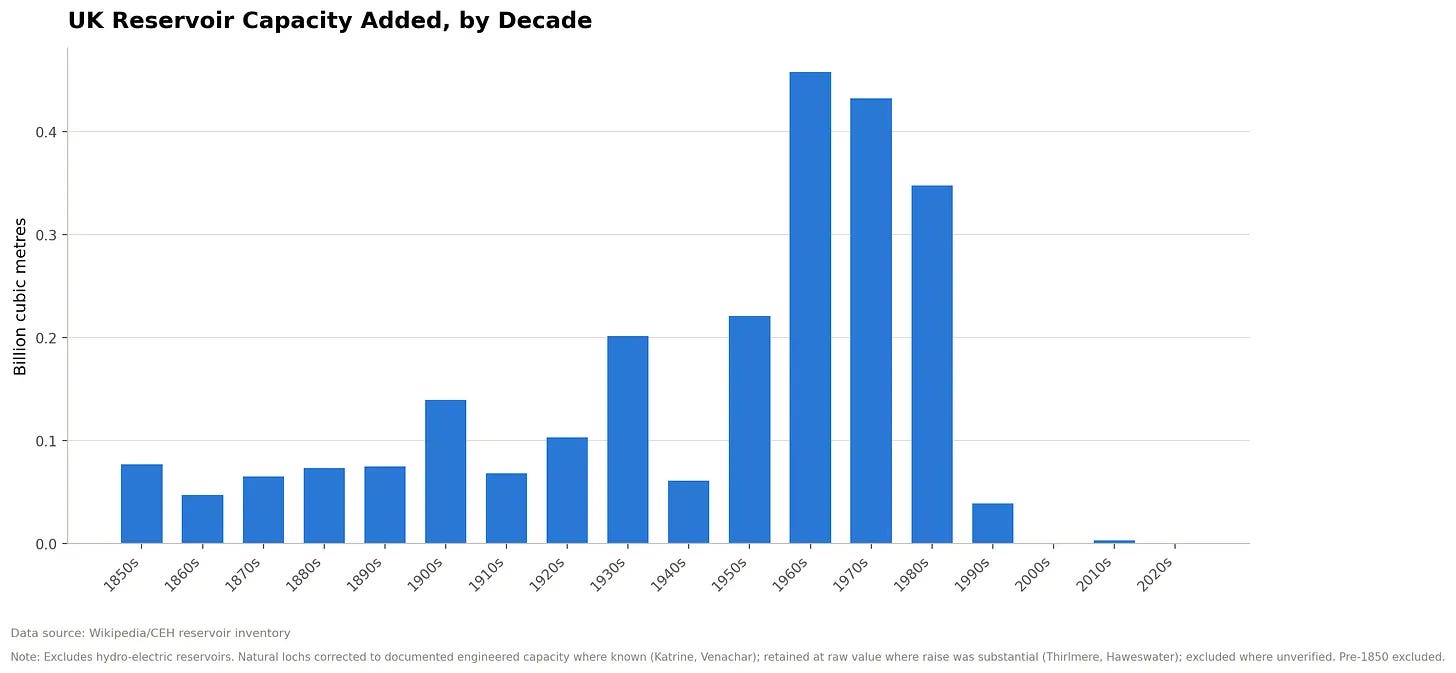
Someone asked a very reasonable question: why don’t we just build some desalination plants instead? Reservoirs are pretty big infrastructure projects. They constantly get blocked by local communities. They clearly disrupt the ecosystems and environments where they’re built.
Now, a lot of you will immediately think this is an insane idea. Do you realise how much energy desalination uses?!
I admit, it does seem a bit mad. Rather than just collecting freshwater in a big hole before it goes into the ocean, we’ll let it run in there, get all salty, then use a bunch of energy to pull the salt back out again.
For a long time, I had also held the “desalination consumes so much energy” tightly. It was a mantra I’d been taught a long time ago, and never updated. That is, until a few years ago, when I dug into the latest numbers. Supplying drinking and household water through desalination is really quite cheap, and uses far less energy than I’d have guessed.
How would these numbers work out for the UK? By that, we’re really talking about England, because that is where most of the water demand will be.
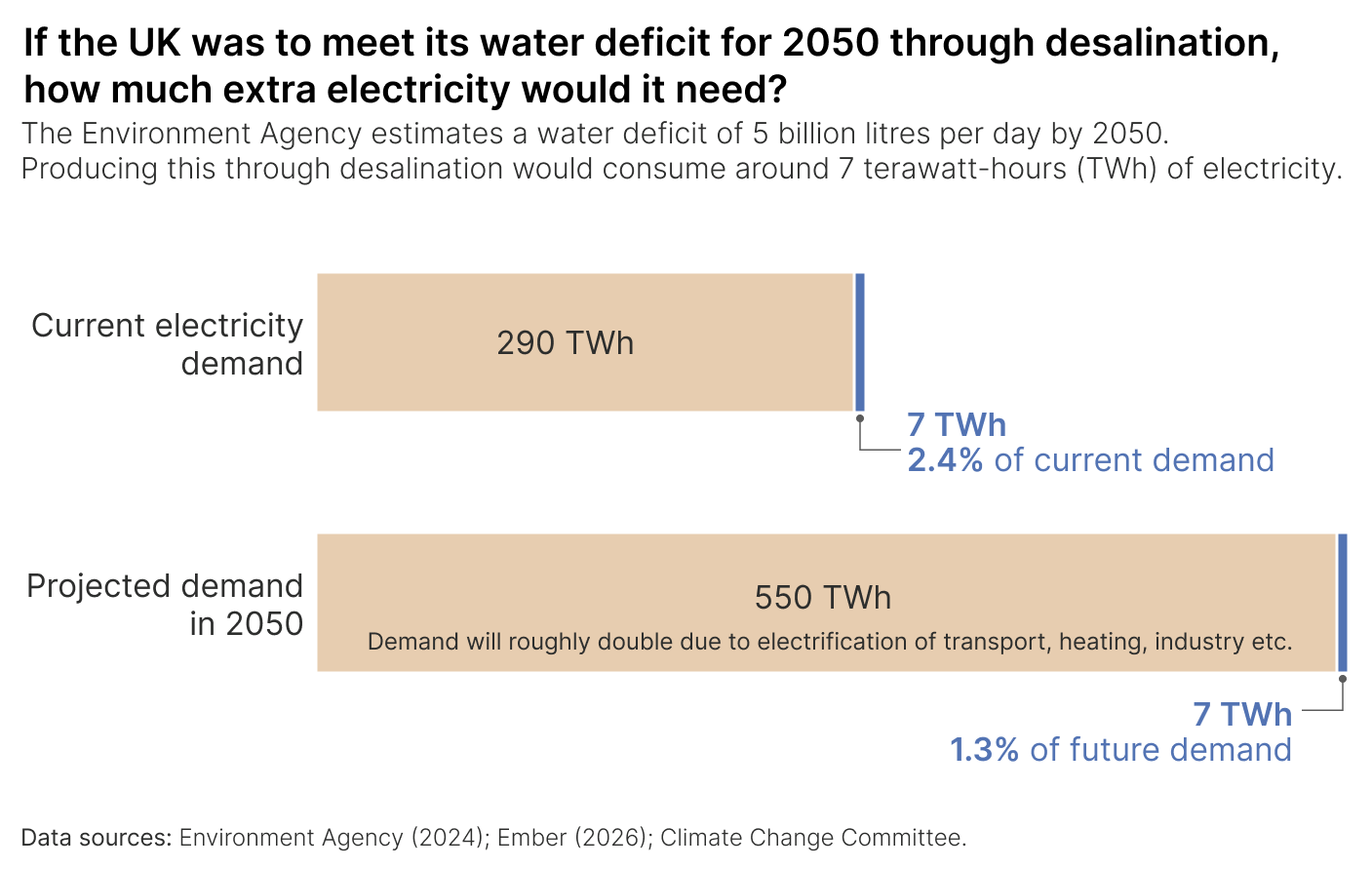
The Environment Agency estimates that by 2050, England will need to fill a deficit of 5 billion litres per day.1 Reverse osmosis from seawater consumes around 4 kWh per cubic metre (m3).2 Or 4 Wh per litre. That means we’d need 7 terawatt-hours (TWh) of electricity to meet all of England’s additional demand from desalination.3
The UK consumes around 290 TWh of electricity a year, so this would add a little over 2% to our annual demand.4 That’s not that much.
The UK’s electricity demand is already set to roughly double by 2050 to meet growing demand from the shift to electrified transport, heating, and industry. An extra 1% or 2% to have adequate water supplies doesn’t seem like a huge deal.
Producing that extra electricity has some (but small) environmental impact, whether it’s the materials or the land use. They also have the problem of managing brine — the plant’s output that they need to discharge somewhere. But reservoirs have environmental costs, too. How do they compare on other measures?
What we can and cannot say about climate change and the Nepal disaster
Posted on 31 August 2026 by Zeke Hausfather
This is a re-post from The Climate Brink
On the morning of August 26th, part of a glacier cliff on the north face of Langtang Lirung (a ~7,200 meter peak 60 km north of Kathmandu) collapsed. The falling mass of ice and rock released energy equivalent to a magnitude 5.2 earthquake according to the USGS, and set off a debris flow that traveled ~100 km down into the Trishuli and Bhote Koshi rivers. This buried and washed away large parts of towns, severed the only highway between Nepal and China, and damaged at least six hydropower facilities. Currently (the morning of August 28th), reports put the death toll at around 500, with roughly 2,000 people still missing across Nepal and Tibet, and we expect these numbers to continue to rise.
The tragedy is unfortunately familiar for the Langtang valley. In 2015, shaking from a magnitude 7.8 earthquake released an avalanche of ice and rock from this same mountain that buried Langtang village and killed around 300 people. But there is an important difference between the two events: in 2015 an earthquake triggered the collapse. This time there was no tectonic trigger. The mountain simply failed, and the collapse itself produced a seismic event that was initially mistaken for an earthquake.
Within hours, some people on social media were confidently asserting that climate change caused the disaster, while others were just as confidently asserting it had nothing to do with it. In this piece I’ll try and lay out what the data and the scientific literature actually supports.
The short version is this: any formal attribution of this specific collapse to climate change is premature, and single events like this are genuinely hard to attribute even after careful study. At the same time, the collapse happened on a mountain that has warmed rapidly for decades, immediately after four consecutive summers that all rank among the five warmest in at least 86 years, and in a valley that has been losing ice at an accelerating rate. A rapidly warming climate and retreating glaciers are increasing risks of these sorts of events in the region, whether or not we can ultimately attribute this particular event.
2026 SkS Weekly Climate Change & Global Warming News Roundup #35
Posted on 30 August 2026 by BaerbelW, Doug Bostrom
Stories we promoted this week, by category:
Climate Change Impacts (8 articles)
- Climate change is unearthing new archeological discoveries, while also threating them NPR's Danielle Kurtzleben speaks with Jørgen Hollesen, a Senior Researcher at the National Museum of Denmark, about how climate change is impacting the study of archaeology. NPR, Danielle Kurtzleben, Aug 23, 2026.
- The world inches toward catastrophic climate events: ‘Bigger shocks are on the way’ Scientists have long warned that the world will experience more intense extreme weather events like heat waves, storms, floods and droughts. But what once seemed like the realm of fiction is now discussed as a possibility, even an inevitability. AP News, Peter Pringaman, Aug 24, 2026.
- Five ways Europe's heat-wave summer is hot, hot, hot Phys.org, Edward Zinin (editor), Aug 24, 2026.
- World`s oceans hit hottest temperature on record in August The new ocean heat record being set in August is especially remarkable as global sea temperatures are typically highest in March and April, after the austral summer. The Guardian, Damian Carrington, Aug 24, 2026.
- How does a collapsing glacier turn into a lethal wall of mud and water? An expert explains what happened in Nepal A collapsing glacier in Tibet led to a devastating wall of water and debris roaring through a valley in Nepal, leaving hundreds dead and many hundreds still missing. The Conversation, Stuart Dunning, Aug 27, 2026.
- Nepal`s devastating floods reveal the danger of `cascading hazards` in Himalayas How many factors driven by climate change can add up to disaster. The Conversation, Daniel Parsons, Aug 27, 2026.
- El Niño climate patterns supercharged by burning of fossil fuels, study finds ‘Godzilla’ event currently brewing could push 50 million people into acute hunger before the end of next year The Guardian, Oliver Milman, Aug 27, 2026.
- Climate crisis could be destabilising mountain areas like Nepal, experts warn Unusual heat this year may have melted ice and thawed bonds that hold glaciers in place – leading to catastrophe The Guardian, Jonathan Watts, Aug 27, 2026.
Climate Science and Research (6 articles)
- Near-real-time storyline attribution for everyday global weather An experimental reanalysis-based approach for extreme event attribution Climate Lab Book, Ed Hawkins, Aug 24, 2026.
- Climate Model Benchmarking: Building Trust and Advancing Science A critical look at how well climate models work, how to successfully use them, and the anticipated challenges for their next-generation development. Eos, Birgit Hassler, Forrest Hoffman, Ranjini Swaminathan and Beth Dingley, Aug 24, 2026.
- The biggest carbon polluters are to blame for half of U.S. western water lost, `groundbreaking` paper says Some of the largest fossil fuel companies on Earth are disproportionately responsible for the water crisis in the American West, according to a first-of-its-kind study published Tuesday. Inside Climate News, Jake Bolster, Aug 25, 2026.
- Skeptical Science New Research for Week #35 2026 Skeptical Science's weekly survey of freshly published climate research. Skeptical Science, Doug Bostrom & Marc Kodack, Aug 27, 2026.
- Climate change is strengthening El Niño, coral records suggest 1000-year archive from the Galápagos portends greater weather disruptions from the Pacific climate cycle. Science, Julia Vaz, Aug 27, 2026.
- Scientists collaborated with narwhals to study warming waters in the Arctic Scientists collaborated with narwhals for a new study to understand human-caused climate change in the Arctic and rising sea levels around the world. NPR, Rachel Carlson, Aug 28, 2026.
Skeptical Science New Research for Week #35 2026
Posted on 27 August 2026 by Doug Bostrom, Marc Kodack
Open access notables
Carbon emissions exacerbating the Western US water crisis, Williams et al., Communications Earth & Environmen
In the western US, limited water supply and high demand--accentuated by anthropogenic climate change--have resulted in overallocated water resources and rapidly depleting groundwater. Simultaneously, legal and policy mechanisms are being pursued regarding the contributions of large emitting entities (“Carbon Majors”) to such impacts. Here, we quantify impacts on western US water resources attributable to the Carbon Majors, and compare results with a simpler-to-use (‘proportional’) approach. Anthropogenic climate change has driven large decreases in water supply (snowpack and streamflow) and increases in water demand (irrigation demand), with roughly half attributable to the Carbon Majors. These changes have led to a widening seasonal gap between water supply and demand, and with Carbon Majors emissions accounting for ~1/3 of observed, climatically-driven groundwater loss in the Central Valley during 2003-2024. Though both approaches yield similar results, consistent over- and underestimations are present in each variable, suggesting caution is needed when using the proportional approach.
Evolution of Global Sea-Level Rise Projections and Their Uncertainty, Garner et al., Earth's Future
For more than 40 years, scientists have projected future sea-level change. Documenting how sea-level projections have evolved is vital for tracking progress, uncertainties, and future research needs. Here, we update and analyze a database of global-mean sea level (GMSL) projections dating from 1982 to 2025, identifying five key findings. First, GMSL projection generation has been concentrated in a small number of developed countries, with 95% of projections produced in the United States, United Kingdom, European Union, or Australia. Second, while GMSL projections for 2050 and 2100 have been published regularly since the early 1980s, only 30 of 103 studies have produced projections extending beyond 2100; all but one of these 30 studies postdates 2010. Third, among studies providing multiple estimates, the range of highest GMSL projections for 2100 has broadened since 2007, reaching 0.6–2.0 m across publications since the Intergovernmental Panel on Climate Change (IPCC) Sixth Assessment Report (AR6). Fourth, GMSL projections from the IPCC have historically been conservative compared to projections from individual studies. Prior to AR6, ∼66% of 2100 projections at the upper end of uncertainty intervals from individual studies exceeded the corresponding upper projections from IPCC reports. However, the inclusion of “low-confidence” GMSL projections in AR6 to assess higher amounts of GMSL change of poorly known likelihood reduces this problem: the 83rd percentile of these low-confidence projections is exceeded by <25% of upper estimates from individual studies. Finally, analyses suggest that the arrival time of key GMSL milestones are often similar for projections spanning multiple eras and using various methodologies.
Equatorial Extreme Convective Storms Are Expanding and Becoming More Persistent, Zhuang et al., AGU Advance
Extreme rainfall is projected to intensify with climate warming, yet changes in the spatiotemporal structure of extreme-producing storms remain poorly understood in the tropics, as the most convectively active regions of the world are also the most data-scarce. We here leverage the first long-term, sub-kilometer, sub-hourly observational network in equatorial Singapore (730 k?m2), with 122 rain gauges reporting 5 min intensities for 2020–2024 and 82 stations with hourly accumulations for 1980–2024, combined with X-band radar (5 min, 100 m) to produce a high-resolution gridded rainfall reanalysis. Our findings indicate that extreme rainfall in Singapore is becoming larger and more persistent, with intensification resulting in higher storm rainfall volumes while rainfall peak intensities remain largely unchanged. Furthermore, extreme rainfall storms are strikingly compact, with spatial and temporal correlations halving over just 2 km and 4 min, decaying faster than previously recognized and observed elsewhere. This suggests that analyses based on coarse data sets or single stations may have misrepresented rainfall intensification under warming.
From this week's government/NGO section:
Survey reveals gap between climate change concern and actual news coverage, Climate News Tracker/Kantar
A survey of journalists and production staff across UK public service media concluded climate reporting needs new approaches. Broadcast journalists in Britain say they rank climate change and environmental issues above many of the traditional pillars of news coverage – including the National Health Service, international conflict and immigration – yet this is not reflected in what audiences actually see and hear. More than 80% of respondents said crowded news agendas and packed running orders hinder climate coverage. Program editors and channel schedulers may be willing to extend a bulletin for a dramatic, unexpected and consequential story, but the climate crisis rarely meets the threshold for such immediate editorial prioritization. The planet heating up is a slow-burning story whose significance has developed over years rather than hours, making it harder to compete with the urgency of daily news. Journalists also highlighted the difficulty of finding strong editorial “pegs” for climate stories outside major weather events or political announcements. Some 65% said climate stories do not always have a clear or timely news peg.
Climate change is driving unprecedented European ocean temperatures, with severe impacts for marine life, Bergin et al., World Weather Attribution
Researchers from Switzerland, Sweden, the United States, Ireland, and the United Kingdom collaborated to assess the extent to which human-induced climate change altered the likelihood and intensity of the extreme sea surface temperature (SSTs) conditions along the European coasts in July 2026. This year’s high SSTs have been remarkable not only in their intensity, but also in how early in the year they were reached. To assess whether all of the observed warming is attributable to human-induced climate change, we combine observations and climate models. In the Celtic region, climate models and observations show very similar trends, while in all other regions the observed trends are much stronger than those simulated by climate models. Despite this, the authors found that in the two Mediterranean regions, the increase in warming attributable to human-induced climate change is about 2°C, substantially surpassing the level of global warming, even under this conservative estimate.
121 articles in 54 journals by 866 contributing authors
Physical science of climate change, effects
Disturbance characteristics and forest properties regulate surface warming and recovery across Europe, Su et al., Nature Geoscience 10.1038/s41561-026-02071-5
Trump’s Iran war supercharged EV sales everywhere except the U.S.
Posted on 26 August 2026 by dana1981
This is a re-post from Yale Climate Connections
Electric vehicle sales are a surprising beneficiary of the Trump presidency – at least outside of the United States.
The Iran conflict caused global oil prices to surge above $100 per barrel in March, April, and May of this year. Gasoline prices soon followed suit, exceeding $4 per gallon in the United States most days since April Fools’ Day.
As the biggest consumer of oil from the Middle East, Asia was hit hardest by its rising prices, shortages, and restrictions. But China’s measures to cut back on its oil imports have prevented global oil prices from escalating as high as many experts predicted.
Electric vehicles are one contributing factor. A recent analysis estimated that China’s rapid adoption of EVs has reduced the country’s oil consumption by 1.5 million barrels per day, or nearly 10%.
A new global electric car market report from the International Energy Agency, or IEA, also concluded that the Iran conflict and associated energy crisis “has clearly reinforced the case for EVs as a way to address energy security and fuel cost concerns," and that it “may therefore further accelerate ongoing shifts in global car markets towards more electrification.”
The share of global new car sales that are electrified – meaning both fully electric vehicles and plug-in hybrids – has grown steadily in recent years, according to the IEA. In 2020, EVs represented under 5% of global new car sales. That share rose rapidly to 20% in 2024 and reached one-in-four new cars sold last year.
Fact brief - Do wind turbines release more emissions than burning fossil fuels?
Posted on 25 August 2026 by Sue Bin Park
Skeptical Science is partnering with Gigafact to produce fact briefs — bite-sized fact checks of trending claims. You can submit claims you think need checking via the tipline.
Do wind turbines release more emissions than burning fossil fuels?
 Wind turbines generate emissions during construction and transportation, but their overall climate impact is far lower than that of fossil fuels.
“Lifecycle emissions” is a measure of all emissions from raw materials, manufacturing, transportation, installation, operation, and disposal. A National Renewable Energy Laboratory review estimates that wind power produces about 13 grams of CO2-equivalent per kilowatt-hour over its full lifecycle. Natural gas averages about 486 grams, while coal is roughly 1,001 grams–or about 77 times wind’s emissions.
Most wind power emissions occur before turbines begin generating electricity, mainly from transporting components and to a lesser degree, manufacturing. Once operating, turbines generate electricity without directly burning fuel, allowing their low-emissions electricity to offset the emissions associated with their production and transportation.
Go to full rebuttal on Skeptical Science or to the fact brief on Gigafact
This fact brief is responsive to quotes such as this one.
Sources
National Renewable Energy Laboratory Life Cycle Greenhouse Gas Emissions from Electricity Generation: Update
Yale Climate Connections What’s the carbon footprint of a wind turbine?
Industrial Ecology Life Cycle Greenhouse Gas Emissions of Utility-Scale Wind Power
Journal of Cleaner Production Life-cycle green-house gas emissions of onshore and offshore wind turbines
Columbia Law School Sabin Center for Climate Change Law Rebutting 33 False Claims About Solar, Wind, and Electric Vehicles
Please use this form to provide feedback about this fact brief. This will help us to better gauge its impact and usability. Thank you!
Climate Adam - Emissions are Flatlining. So Why’s CO2 Rising at Record Speed?
Posted on 24 August 2026 by Guest Author
This video includes personal musings and conclusions of the creator and climate scientist Dr. Adam Levy. It is presented to our readers as an informed perspective. Please see video description for references (if any).
Video description
In the fight against climate change, the world has made immense progress on renewable power - with wind and solar growing faster than ever. And finally carbon dioxide emissions are flatlining. But if we've made so much progress, why is CO2 building up in our atmosphere faster than ever before? And what can we do to finally protect our climate and ourselves?
Support ClimateAdam on patreon: https://patreon.com/climateadam
2026 SkS Weekly Climate Change & Global Warming News Roundup #34
Posted on 23 August 2026 by BaerbelW, Doug Bostrom
Stories we promoted this week, by category:
Climate Education and Communication (6 articles)
- The false and the furious: We aren't just bothered by different beliefs-we're bothered when we think others are wrong When people use facts to defend their preferences, tastes or values, they may turn a disagreement over priorities into a dispute over who is right and who is wrong, turning up the emotional heat. The Conversation, Andras Molnar, George Loewenstein, Aug 15, 2026.
- `It is not only a future certainty - the disaster is already here`: why we need climate fiction As wildfires rage across Europe and Britain swelters through its hottest summer on record, literary fiction has a vital role to play in capturing the severe consequences of climate crisis The Guardian, Tara Menon, Aug 16, 2026.
- Climate Trunk - Science Summary post of John Lang's Climate Trunk visuals in the "Science" ring Skeptical Science, Bärbel Winkler, Aug 18, 2026.
- Climate doom may discourage climate action, but there`s a way to counter it The Conversation, Sander van der Linden & Rachel O'Boyle, Aug 18, 2026.
- The cognitive bias behind bad climate math A new study finds two persistent mental shortcuts—not ignorance—are why people keep overrating recycling and underrating flying less. The Anthropocene, Sarah DeWeerdt, Aug 18, 2026.
- In a Summer of Catastrophe, Climate Scientist`s Words from the 80s Playing Out A review of what scientists were saying to the public about climate change in the 1980s. This is Not Cool, Peter Sinclair, Aug 19, 2026.
Climate Policy and Politics (6 articles)
- In Germany, record heat meets climate action fatigue DW, Oliver Pieper, Aug 17, 2026.
- UK politicians vastly overestimate public opposition to climate policies, study finds Members of Parliament from the UK's three biggest political parties in the House of Commons significantly overestimate levels of public resistance to major policy proposals for tackling climate change, a University of Cambridge study suggests. Phys.org, Gaby Clark, Aug 19, 2026.
- How far-right parties are using extreme weather events to boost their cause Political scientists explain why extreme weather events like this summer's European heatwaves can drive support to parties that traditionally deny human-made climate change. NPR, Ruth Sherlock, Aug 19, 2026.
- How Florida quietly removed climate change content from textbooks Publishers acceded to state requests watering down information on climate change’s impact, WUSF/Hechinger Report investigation finds. Now the state has turned to updating its science standards The Hechinger Report, Jessica Meszaros and Katie Worth, Aug 20, 2026.
- How Trump Is Trying to Crush California`s Climate Policies At least a half-dozen federal agencies have taken action against the state that has led the nation in environmental protections. New York Times, Maxine Joselow, Aug 20, 2026.
- Extreme Heat Waves Fuel Political Tensions in Europe At the limits of adaptation, governments face a choice: point fingers, or seize the moment for transformational change. Inside Climate News, Bob Berwyn, Aug 21, 2026.






